

10 yard
The 10 yard is the small-job size, with about 2 tons usually included.

Homeowners place most of our Denver orders, and the 30 yard is the container we deliver most often.
From $535* for a 30 yard
*Prices vary with delivery address, container size, debris type, rental length, weight allowance and site access. Ranges shown are typical. Your written quote lists every line item before you approve it.
Quote in 30 seconds · open to 7pm
Pricing
Denver pricing below is for general debris. The 30 yard is priced most often, the 20 yard is a strong second, and the 10, 15 and 40 yard fill in the rest.
| Size | Typical* | Tons included | Orders priced, 12 mo |
|---|---|---|---|
| 10 yard | $425 to $495* | 2 tons | 23 |
| 15 yard | $445 to $540* | 2 tons | 14 |
| 20 yard | $495 to $565* | 2.5 tons | 58 |
| 30 yard | $535 to $635* | 3 tons | 81 |
| 40 yard | $695 to $700* | 4 tons | 10 |
*Prices vary with delivery address, container size, debris type, rental length, weight allowance and site access. Ranges shown are typical. Your written quote lists every line item before you approve it.
The From price is for a 30 yard. Other sizes are in the table.
A Denver rental usually includes 14 days. The 30 yard comes with about 3 tons and the 20 yard with about 2.5 tons.
Each extra ton on a Denver 30 yard is about $95*. Each extra day on that 30 yard is about $25, after the 3 tons and 14 days included.
When a Denver order lists a delivery fee, it is usually about $50, quoted beside the 30 yard rate rather than inside it.
Sizes
Denver volume sits in two sizes, the 30 yard and the 20 yard, with the 10 yard a distant third in the mix.
The 10 yard is the small-job size, with about 2 tons usually included.
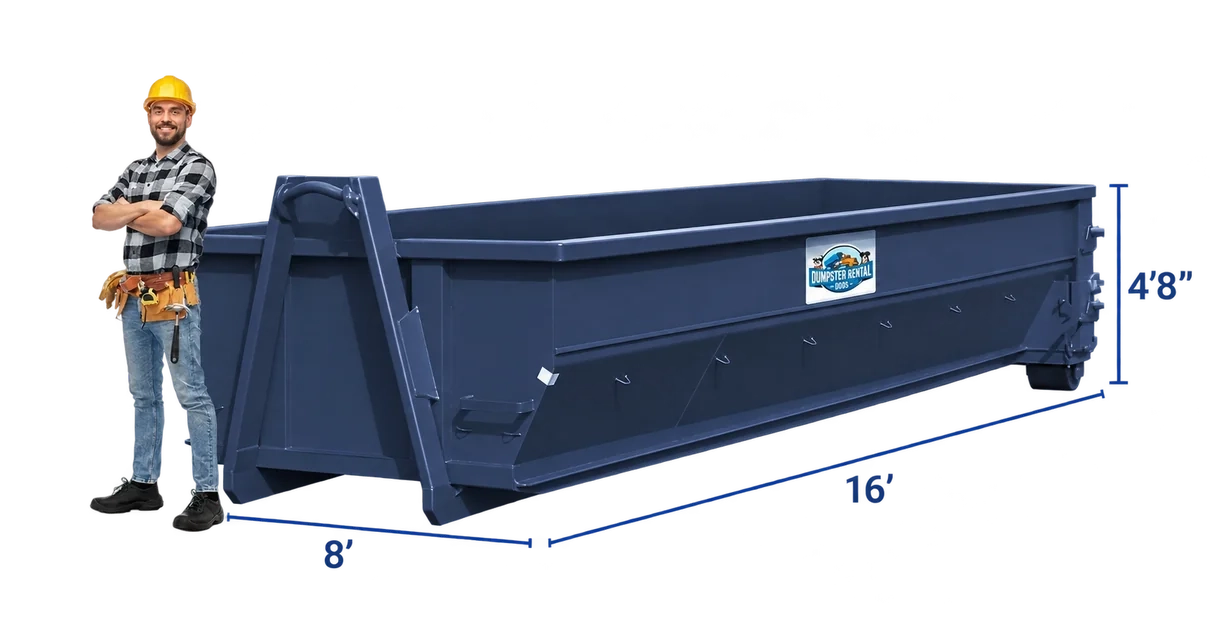
A Denver 15 yard includes the same 2 tons as the 10 yard, with more room for the same weight.

The 20 yard is the Denver runner-up, a popular size across the metro, with about 2.5 tons included.

The 30 yard is the Denver go-to and the size we deliver most, with about 3 tons usually included.

The 40 yard is the large-project option, ordered less often than the 30 yard and usually including 4 tons.
Recent work
Construction debris filled 150 of our 187 Denver orders, with 29 household cleanouts, and yard waste showed up only twice.
Source: Dumpster Rental Dogs orders by delivery date. Job type comes from the debris material on the order. Customer names withheld.
Weight and disposal
Denver landfills ban batteries, electronics, tires and liquids, and larger projects permitted after September 2026 must divert at least half the debris.
| Topic | Rule |
|---|---|
| Items banned from Colorado landfills | Colorado landfills may not take lead-acid batteries, electronic waste, waste tires, or liquid waste including liquid paint, automotive fluids and liquid household chemicals. Source |
| Construction recycling rule | For permit applications on or after September 1, 2026, a new building or addition over 500 square feet, or an alteration over 2,500 square feet, must divert at least 50 percent of debris by weight by recycling or reusing three covered materials. Contractors upload weight tickets or donation receipts as proof. Source 1 Source 2 |
| Overflow and spills | A container in Denver's right-of-way may not overflow, leak, or let debris or waste reach streets, sidewalks, alleys or storm drains. The owner pays for cleanup and repairs. Source |
Colorado landfill bans that apply in Denver cover lead-acid batteries, electronic waste, waste tires and liquid waste such as paint or automotive fluids.
Permits and rules
Denver DOTI Permit Operations issues the street occupancy permit, and the container company, not the customer, is who applies.
| When | What you need | Lead time | Who to call |
|---|---|---|---|
| Any dumpster, roll-off or other container placed in the public right-of-way, such as a street parking lane | A Right-of-Way Revocable Street Occupancy Permit from DOTI. Only the container company can obtain it, and the company must hold a Denver ROW Dumpster License number. The permit sets start and end dates and must be visible on the property. Source 1 Source 2 | About 5 business days for permit processing | Denver DOTI Permit Operations, 303-446-3759 |
| Placing the container once the permit is issued | The container must fit within a parking lane and sit at least 20 feet from any corner, alley or entrance. It may not occupy a sidewalk, tree lawn, travel lane, no-parking zone or alley. Reflective tape or flashing barricades are required, and placement is limited to 180 days in a 12 month period. Source | Denver DOTI Permit Operations |
Denver's container sheet says a permit is required for any placement in the right-of-way, except a trailer or other item with wheels and a license plate. Its container pages cover the public right-of-way and do not address containers kept on private property.
Weather and season
18.7°F
Denver's January low at the airport averages 18.7°F, and about 156 nights a year reach freezing. Freezes run from around October 9 to May 5, so snow on the drop spot is normal well into spring.
89.9°F
The July high averages 89.9°F, and about 46 days a year reach 90°F or hotter. Plan outdoor tear-offs for the cooler morning hours.
2.16 in
May is the wettest month at the airport, and it still averages only 2.16 inches. Dry ground means fewer delays, but a hailstorm can still soak an open load before pickup.
May
May is Denver's busiest month, with March and June close behind.
Winter
December and January stay steady, a level winter stretch.
Scheduling
Denver's usual wait from order to drop-off is about two days, and some drops leave within a day.
Haul-off or a swap for a Denver 30 yard is priced on its own line*, separate from the 14 days already included.
A two day wait will not fit every Denver site. Call (720) 650-4119 if the debris has to move sooner than that.
Delivery area
Most of our Denver deliveries go to the suburbs rather than the city itself. Littleton and Aurora lead, followed by Golden, Westminster and Parker.
Placement
Any Denver dumpster in a street parking lane needs a DOTI occupancy permit that only the container company can pull, with about 5 business days to process.
Many of our Denver jobs are in the suburbs. A private driveway or lot is outside the DOTI container sheet, which covers only the public right-of-way.
A Denver parking-lane container needs a revocable street occupancy permit, and only the container company can obtain it. See permits Allow about 5 business days.
FAQs
Denver answers below use typical order figures for the metro, DOTI's container sheet and the landfill and recycling rules linked in the tables.
Denver delivery usually takes about two days, and some drops go out within one.
A Denver parking-lane container needs a DOTI permit and must sit at least 20 feet from any corner, alley or entrance. Those pages do not cover a box kept on private property.
Only the container company can pull Denver's revocable street occupancy permit, and processing runs about 5 business days. The permit has to be visible on the property.
A Denver rental usually includes 14 days, and most finished jobs come off site after about 8.
Expect about 2 tons on a Denver 10 yard or 15 yard, 2.5 tons on a 20 yard, 3 tons on a 30 yard and 4 tons on a 40 yard.
Colorado landfills serving Denver cannot accept lead-acid batteries, electronic waste, waste tires or liquid waste, including paint and automotive fluids.
When a Denver order lists a delivery fee, it is usually about $50 next to a 30 yard, and extra tons run about $95 on a 30 yard. Your written quote lists every line item before you approve it.
Tell us when the Denver container should come off the site. Most finished rentals last about 8 days.


